
Trust Unlocks Disclosure
Why clients withhold information, and how to create the conditions where they share.
The Braintrust
Every Pixar movie starts ugly.
Ed Catmull, Pixar's co-founder, has a line about it: "Early on, all of our movies suck."
Finding Nemo sucked. The Incredibles sucked. Inside Out sucked.
They all started as rough ideas that didn't quite work. Confused plots. Flat characters. Pacing problems.
What turned them into some of the most successful films in history?
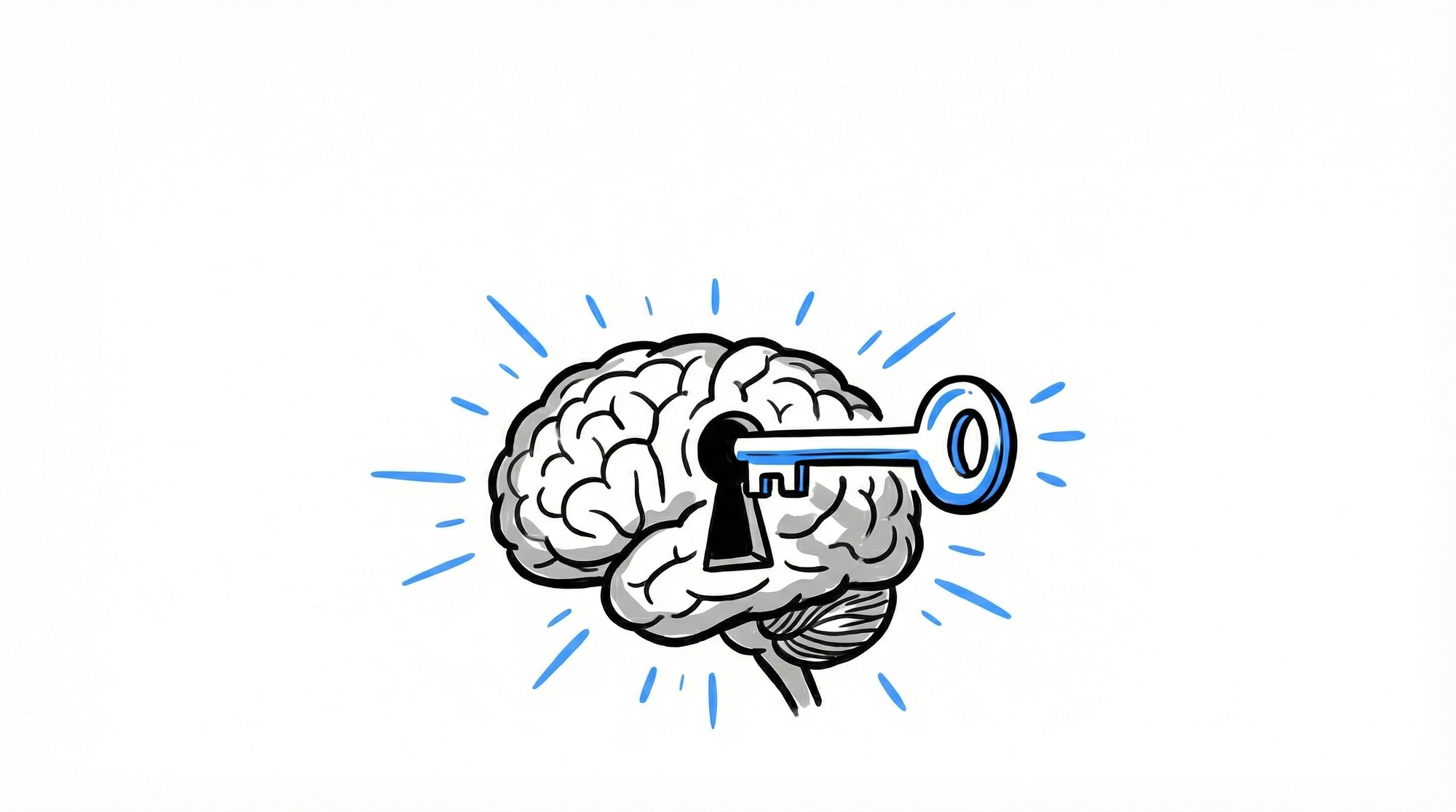
The Braintrust.
The Braintrust is a periodic meeting where Pixar directors show work-in-progress and receive candid feedback from peers. It's not a committee. It has no authority. The director retains full control of their film.
The rules are simple:
- Feedback focuses on the project, not the person
- The Braintrust has no authority — the director decides what to do with feedback
- Everyone has been in the hot seat themselves
Under these conditions, something unusual happens: directors reveal their worst work.
They show the ugly babies. The scenes that aren't working. The story problems they can't solve.
They share complete information because they trust the room won't use it against them.
The Mechanism
Why does the Braintrust work when most feedback sessions don't?
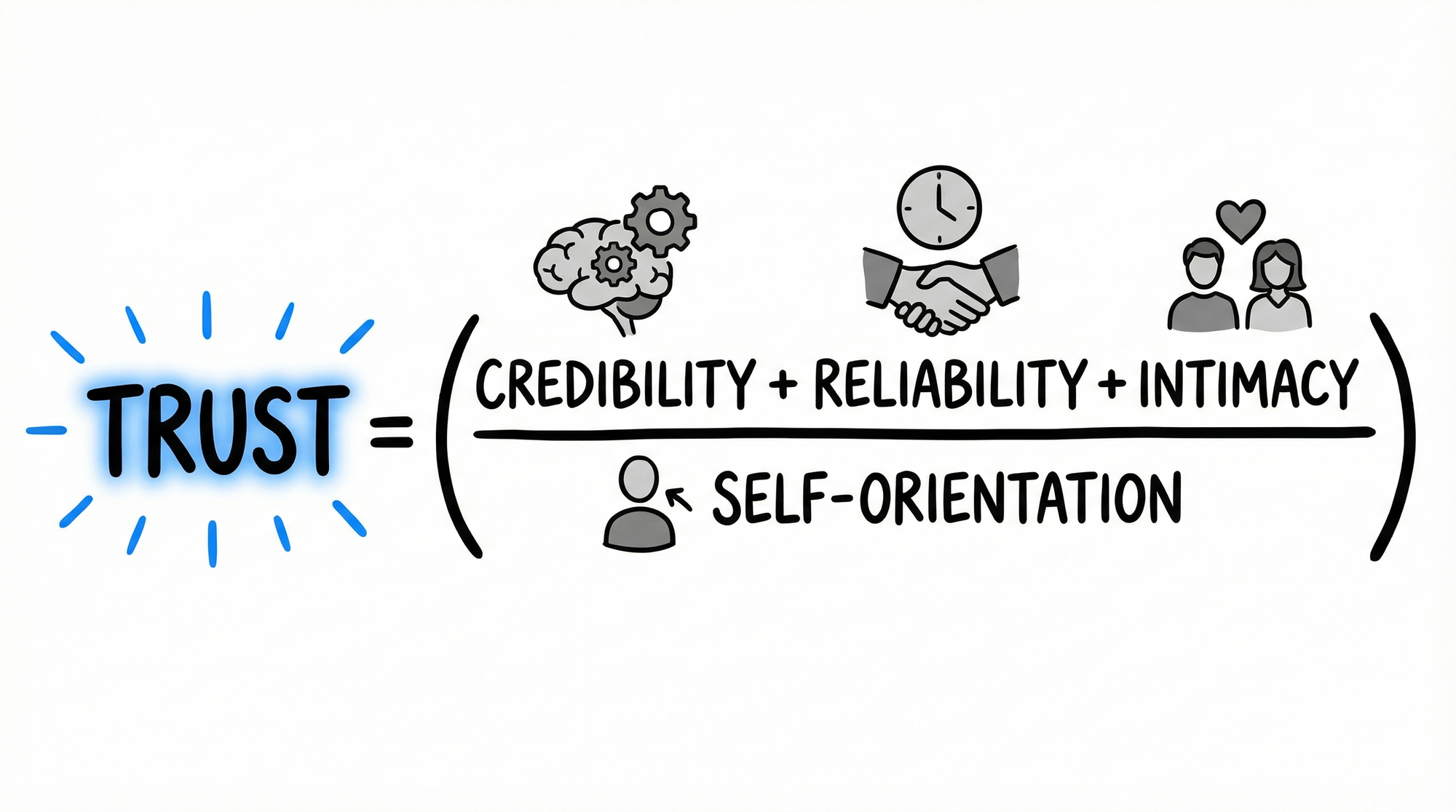
The Trust Equation explains it:
          Credibility + Reliability + Intimacy
Trust  =  ─────────────────────────────────────
                    Self-Orientation
- Credibility: Do I believe you know what you're talking about?
- Reliability: Do I believe you'll do what you say?
- Intimacy: Do I feel safe sharing with you?
- Self-Orientation: Are you focused on yourself or on me?
The Braintrust maximizes the top three and minimizes the bottom.
Credibility: Everyone in the room has made successful films. They know what they're talking about.
Reliability: The meetings happen regularly. The process is consistent. Directors know what to expect.
Intimacy: No authority means no threat. Feedback is offered, not imposed. The director controls what they do with it.
Self-Orientation (low): Braintrust members aren't there to prove they're smart. They're not competing for credit. They're peers who've all been vulnerable in the same room.
When self-orientation is low, trust goes up. When trust goes up, disclosure unlocks.
What Clients Withhold
Your clients have a Braintrust problem.
They're sitting on information you need. The real reason they hired you. The stakeholder politics you should know about. The budget constraints they haven't mentioned. The competitor that's scaring them.
But they don't share all of it.
Not because they're hiding it deliberately. Not because they're dishonest.
They don't share because they don't yet trust that you'll use it well.
Watch for the signs:
- Vague answers to specific questions
- Deflecting to different topics
- "I'm not sure" to questions they should know
- Changing the subject when you get close to something sensitive
These aren't evasions. They're the client testing whether you're safe to trust.
What Increases Self-Orientation
Here's what kills trust in discovery conversations:
Demonstrating expertise instead of listening. Every time you pivot from their concern to your solution, you're signaling that you're more interested in being impressive than in understanding.
Finishing their sentences. You think you're showing you understand. You're actually showing you're impatient.
Steering toward predetermined solutions. When you already know what you're going to recommend before you've finished listening, clients feel it. They start tailoring what they say to fit what you want to hear.
Making it about you. "We had a client just like this..." can be useful. But if every question loops back to your experience, your credentials, your past success, you're raising self-orientation.
High self-orientation doesn't feel aggressive. It feels like enthusiasm. It feels like expertise.
But to the client, it feels like you're not really listening. Like you've already made up your mind. Like sharing more would be pointless.
So they don't.
What Decreases Self-Orientation
The Braintrust works because members focus entirely on the director's problem, not their own status.
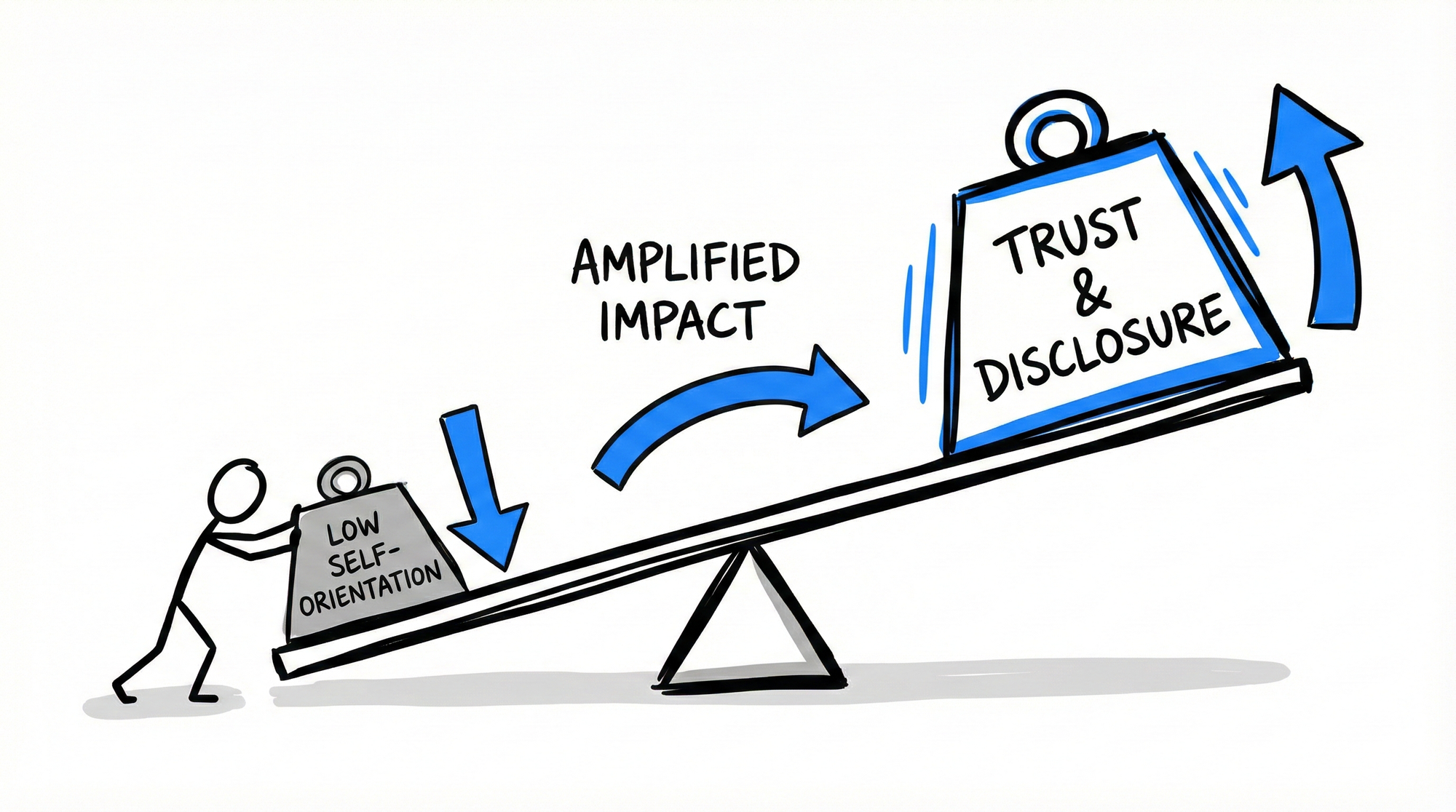
Apply the same principle:
Ask questions you don't know the answer to. Not rhetorical questions that lead to your point. Genuine questions where their answer determines what you do next.
Let silence exist. After they answer, wait. Don't rush to fill the gap. Sometimes the most important information comes in the second sentence, after they've had a moment to think.
Mirror. Repeat their last one to three words as a question. "The board is getting impatient?" They'll almost always elaborate. It signals you're listening without steering.
Reflect, don't interpret. "It sounds like the board pressure is making this urgent" is reflection. "So really this is a board politics problem" is interpretation. Reflection invites more. Interpretation closes the door.
Name the negatives before they do. "You might be thinking this sounds like every other agency pitch." By naming their skepticism, you disarm it. They don't have to protect themselves from you because you already acknowledged the concern.
Give them control. Ask what they want help with before telling them what you think. Let them steer the conversation. Be led, not leading.
Be curious, not clever. The goal isn't to impress them with your insight. The goal is to understand their situation so completely that good insight becomes inevitable.
The Tenerife Connection
At Tenerife, the information that could have prevented disaster existed in multiple places.
The KLM flight engineer asked: "Is he not clear, that Pan American?"
The captain said: "Oh yes."
The engineer didn't push back.
The hierarchy suppressed the question.
The captain was senior. Experienced. Respected. The engineer felt it wasn't his place to challenge.
This is the same dynamic that makes clients withhold from you. When you're the expert — when you're credentialed, confident, full of solutions — clients feel it's not their place to tell you things you might not want to hear.
They defer to your expertise. They tell you what they think you want to know. They withhold the messy, uncertain, political context that would actually help you do your job.
Your expertise can become the barrier to disclosure.
Creating Safety
Here's how to lower the barrier:
Name the dynamic. "I'm going to ask some questions that might feel basic or obvious. I've found that the most important context often comes from things clients assume we already know."
Share your uncertainty. "I don't have a solution in mind yet. I'm trying to understand the situation first." This signals that the conversation isn't a sales pitch.
Ask about what didn't work before. "What have you tried that didn't work?" This invites them to share failure, which is vulnerable. If you respond with curiosity rather than judgment, trust increases.
Acknowledge the politics. "Are there stakeholders who see this differently than you do?" This signals that you understand organizations are complicated. It invites them to share the messy reality.
Make it safe to correct you. "Tell me if I'm wrong here, but it sounds like..." This explicitly invites pushback. It lowers the cost of disagreeing with you.
The Disclosure Test
Here's how to know if you're building trust effectively:
After discovery, ask yourself: "Did the client tell me something they probably haven't told other vendors?"
If yes, trust is working. They're sharing the real context.
If no — if everything they said could have come from a brochure or a first-call script — trust isn't unlocked yet. You have surface information but not depth.
The solution isn't to push harder. It's to lower your self-orientation further. Be more curious. Be less impressive. Give them more control.
Trust unlocks over time. But it unlocks faster when you demonstrate that their information is safe with you.
The Standard
Information flow depends on trust.
Clients who don't trust you will share enough to seem cooperative but not enough to actually help. You'll work on the wrong problems because you're operating on incomplete data.
The Braintrust works because everyone has been vulnerable in the same room. Directors share their worst work because they know the room won't use it against them.
Create the same conditions.
Lower self-orientation. Ask genuine questions. Give them control. Demonstrate that their messy, uncertain, political reality is exactly what you need to hear.
Trust unlocks disclosure. Disclosure enables accurate work.
Without it, you're flying blind.
"The Braintrust doesn't work because Pixar hired geniuses. It works because geniuses will only share their worst work when they trust the room won't use it against them."
This post explores Trust Unlocks Disclosure, the input quality mechanism from The Information Flow. Without trust, you're flying blind.