
SEO Conversion Fails at Keywords
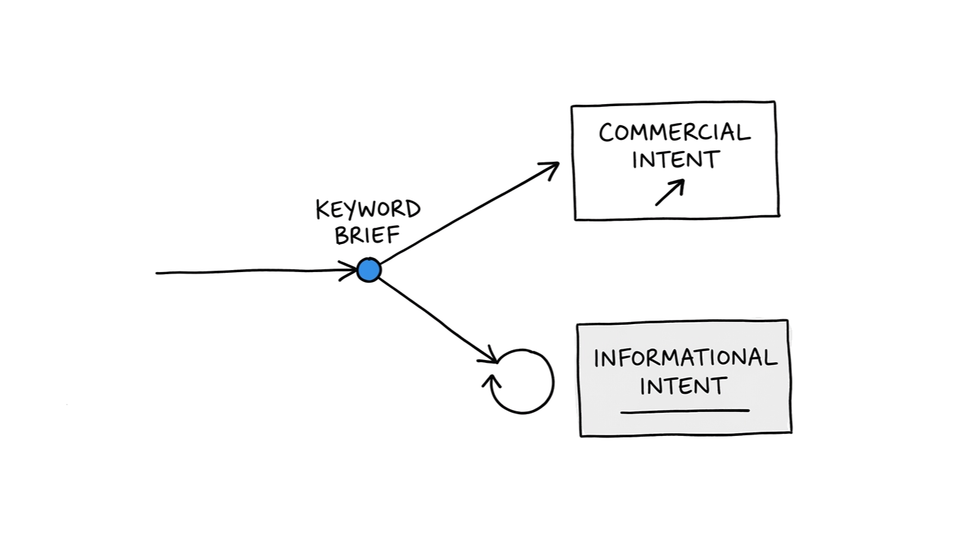
- Keyword intent mismatch is the structural cause of SEO conversion failure — not your CTAs, forms, or landing page copy
- Content type mix (informational vs. commercial/transactional ratio) is the diagnostic signal that CRO audits miss entirely
- Recovery starts with one keyword export and an intent column — not another round of A/B tests
Three rounds of CRO. CTAs rewritten. Forms simplified. A/B tests run through a full quarter.
Nothing.
The consultant said to add trust signals. Testimonials went up. The form submission numbers stayed flat.
Keyword intent mismatch is the structural cause of SEO conversion failure for practitioners who have already optimized their CTAs, forms, and landing page UX. The problem was set before the first word was written.
Keyword Intent Mismatch Causes Conversion Failure
The conversion problem was never in the page. It was in the keyword brief that created it.
Keyword intent mismatch is the gap between what a visitor searched for and what your page asks them to do next. When a page ranks for an informational query ("what is keyword intent") but pushes a commercial outcome ("book a strategy call"), the conversion ceiling is built into the keyword selection. Not the headline. Not the button color.
The mechanism is behavioral. Search intent is a contract visitors arrive with, not a variable you override on the page. Informational queries signal a research state. Visitors in that state read, scan, and leave.
A CTA asking them to commit to a next commercial step violates the contract they arrived with. The opt-in rate reflects the contract, not the copy test.
Google's Search Quality Rater Guidelines classify user needs by intent category. Informational queries are evaluated on whether content satisfies a research need. Transactional and commercial queries are evaluated on whether content facilitates an action.
The two categories are structurally distinct states. A page built for one intent type cannot be converted to serve the other through CTA changes alone.
CRO assumes the conversion problem lives in the page. Keyword intent mismatch means the problem was three decisions upstream, in the spreadsheet where the keyword was chosen and the content type was assigned.
Content Type Mix Is the Diagnostic Signal
Pull your keyword export. Add an intent column. Label each keyword: informational, commercial, or transactional. Count the ratio.
Content type mix is the proportion of informational versus commercial and transactional pages in an SEO program. That ratio is the surface-level measure of keyword intent mismatch at scale. For programs with flat conversion rates despite healthy traffic volume, this ratio is the first diagnostic signal, before GA4, before heatmaps, before any on-page audit.
The pattern from client audits: programs that rank well but fail to generate leads run at 4:1 or higher. Four informational pages for every one commercial or transactional page. That ratio isn't a content style choice. It's a structural ceiling on the conversion volume the program can produce.
Grow and Convert's analysis of SEO conversion rates across keyword types (2026) shows why that ceiling exists: pages targeting informational, high-volume keywords convert at 1% or less from organic traffic, while commercial-intent pages targeting bottom-of-funnel keywords average 4.85%. When a program's ranking pages skew informational, that gap isn't a CTA problem. It's a ratio problem.
Semrush and Ahrefs both classify intent at the keyword level in their standard exports. In Semrush, the Intent column in Keyword Overview returns I (informational), N (navigational), C (commercial), or T (transactional). Run your top 30 ranking pages through that filter. The ratio shows what kind of program was actually built.
One edge case worth naming: if commercial-intent content exists in the program but ranks for informational queries, the root cause shifts. That's a title and meta description mismatch, not a keyword selection problem. The page is promising one intent category while the content delivers another. The fix is on-page signal alignment, not new content.
Content type mix is the diagnostic signal that sits one file upstream of every CRO audit — and most teams never open that file.
Conversion Diagnosis Starts at the Keyword Spreadsheet
If you opened GA4 first, you opened the wrong file.
GA4 shows what happened after visitors arrived. The keyword spreadsheet shows why a certain kind of visitor arrived at all. SEO conversion diagnosis starts one file upstream of analytics.
Keyword intent mismatch diagnosis requires three inputs: current keyword rankings, their intent classifications, and the content type assigned to each ranking URL. Most practitioners have the first. The second takes 30 minutes in Semrush or Ahrefs. The third is a column in a spreadsheet that doesn't exist yet.
According to Grow and Convert's conversion rate study by keyword intent type (2026), commercial-intent pages targeting bottom-of-funnel keywords convert at 4.85% on average from organic traffic. Top-of-funnel blog posts targeting informational queries convert at 1% or less. That gap does not close with on-page optimization. The ceiling is set by the intent the page was built for, not the CTA written on it.
The diagnostic output is a single number: what percentage of ranking pages carry commercial or transactional intent? If that number sits below 25%, no CTA iteration recovers it. The conversion capacity isn't there.
The CRO audit confirmed a symptom. The keyword spreadsheet holds the cause.
Keyword Intent Ratio Unlocks Recovery
What would it take to shift that ratio 20%?
Keyword intent ratio is the percentage of an SEO program's ranking pages targeting commercial or transactional queries. Recovery from keyword intent mismatch doesn't require tearing down existing content. It requires building against the gap.
Informational content retains value as a traffic and authority layer. Conversion recovery comes from adding commercial and transactional pages that capture intent from visitors already primed by the informational tier. A cluster structure serving three intent states from one topic area, an informational overview, a commercial comparison, and a transactional landing page, lets existing content function as funnel entry rather than a dead end.
The math is concrete. A program with 40 ranking pages at 4:1 (32 informational, 8 commercial/transactional) shifts to 2:1 by adding 12 commercial-intent pages. One quarter of targeted content work. Not a site rebuild.
Every new keyword brief becomes a conversion decision before it becomes a content brief. Intent classification first. Content type assigned before the title is written.
That is the shift. Not more CRO rounds. A different file opened first. The keyword spreadsheet becomes the place where conversion problems are solved, because that is where they are created.